Screening & Checks
Bone density, fracture risk and what prevents it
Hip fracture is one of the most expensive and life-changing events in older age, and much of the risk is modifiable.
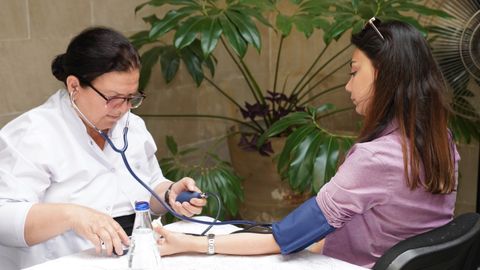
Osteoporosis is silent until a bone breaks, and the fracture that follows is among the most consequential single events in later life.
What is at stake
Hip fracture carries substantial mortality in the year afterwards and a high rate of permanent loss of independence, with a large proportion of people never returning to their previous level of function.
Vertebral fractures cause height loss, chronic pain and disability, and frequently occur without a fall and without being recognised at the time.
The economic cost — acute care, surgery, rehabilitation, and in many cases residential care — is among the largest in musculoskeletal medicine.
Which makes prevention unusually valuable.
How risk is assessed
Not by scanning everybody.
Fracture risk calculators combining age, sex, weight, previous fracture, family history, smoking, alcohol, steroid use and certain conditions estimate ten-year risk and determine who needs a scan.
DEXA scanning measures bone mineral density and gives a T-score, with osteoporosis defined below a threshold.
Importantly, most fractures occur in people whose density is not in the osteoporotic range, which is why risk assessment uses more than the scan.
Anyone who has had a fragility fracture — a break from a fall from standing height or less — should be assessed, and this is frequently missed.
Who is at higher risk
The factors worth knowing.
Age, and postmenopausal status, since oestrogen loss accelerates bone loss.
Previous fragility fracture, which is one of the strongest predictors.
Parental hip fracture.
Long-term oral steroid use.
Low body weight.
Smoking and high alcohol intake.
Conditions including rheumatoid arthritis, coeliac disease, inflammatory bowel disease, hyperthyroidism, hyperparathyroidism and early menopause.
Certain medications including some anti-epileptics, aromatase inhibitors and androgen deprivation therapy.
And immobility.
What prevents bone loss
The non-pharmacological measures.
Weight-bearing and impact exercise, which loads bone and stimulates adaptation — walking is better than nothing and higher-impact activity is more effective where safe.
Resistance training, which has evidence for bone density when the loading is sufficiently challenging.
Adequate calcium, preferably from food, and vitamin D, which is where supplementation has its clearest indication.
Adequate protein and total energy, since low energy availability is associated with bone loss in both sexes.
Stopping smoking.
Reducing alcohol.
And in specific circumstances, hormone therapy at menopause, which prevents bone loss and is a factor in that decision.
Falls prevention
Which matters at least as much as bone density.
Most fractures result from falls, and falls prevention has among the best evidence of any intervention in older adults.
Multifactorial programmes — strength and balance training, medication review, vision assessment, home hazard assessment and footwear — reduce falls substantially in trials.
Strength and balance exercise specifically has good evidence, and programmes are available through health services and community providers in many places.
Medication review matters: sedatives, antihypertensives causing postural drops, and anticholinergic drugs all contribute.
Vision correction and cataract surgery reduce falls.
And home measures — lighting, removing loose rugs, grab rails, clearing clutter — are cheap and effective.
Medication for osteoporosis
Where treatment is indicated.
Bisphosphonates are first-line in most guidance, are available as generics costing very little, and reduce fracture risk substantially.
They require correct administration — on an empty stomach with water, remaining upright — and adherence is poor, which limits real-world effectiveness.
Annual intravenous options exist for those unable to take oral preparations.
Denosumab, given by injection, is effective and must not be stopped abruptly because of rebound bone loss and vertebral fracture risk, which is a critical practical point.
Anabolic agents are used in severe disease.
Rare adverse effects — osteonecrosis of the jaw and atypical femoral fracture — receive attention disproportionate to their frequency and are worth discussing rather than being a reason to decline treatment.
Dental assessment before starting is recommended for some agents.
Men
Substantially underdiagnosed.
Osteoporosis in men is less common than in women and is far from rare, and outcomes after hip fracture are worse.
Secondary causes are more frequently present — hypogonadism, steroid use, alcohol, and various medical conditions — which makes investigation important.
Men who sustain a fragility fracture should be assessed, and frequently are not.
The practical version
What to do at each stage.
In young adulthood, build peak bone mass through activity and adequate nutrition, since peak mass determines the starting point.
In midlife, maintain resistance and impact exercise, address smoking and alcohol, and discuss menopause management including bone implications.
In later life, prioritise falls prevention, strength and balance work, medication review, vision and vitamin D.
And after any fragility fracture, ensure a formal fracture risk assessment happens, since the fracture liaison services that exist to catch this are inconsistently available and the second fracture is preventable.
General information only, not medical advice. Consult a qualified clinician about fracture risk and treatment, and do not stop denosumab without medical advice.
Also by Dr Samuel Adeyemi
- Dental emergencies and what to doDental & Vision
- Overdiagnosis, and why more medicine is not always betterScreening & Checks
- Mouth ulcers, bad breath and the small thingsDental & Vision
- Dry eye, contact lenses and daily eye careDental & Vision