Dental & Vision
Cataract, glaucoma and the ageing eye
Two very common conditions with very different urgency, and one of the most successful operations in medicine.
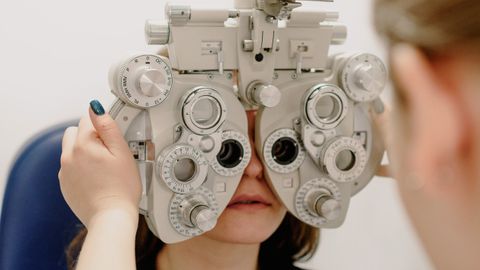
Most sight loss in older age comes from a small number of conditions, several of which are treatable if detected before damage occurs.
Cataract
Clouding of the lens, essentially universal with age to some degree.
Symptoms: gradual blurring, glare and haloes particularly at night, faded colours, difficulty in bright light, and frequent changes of prescription.
It is painless and progressive, and it does not cause sudden vision loss.
Risk factors include age, diabetes, steroid use, smoking, ultraviolet exposure and previous eye injury or surgery.
Treatment is surgical replacement of the lens, and it is among the most commonly performed and most successful operations in medicine, typically taking under half an hour under local anaesthetic as a day case.
Outcomes are excellent for the great majority.
Timing is based on how much it affects daily life rather than on a threshold, though driving standards are a practical trigger.
Lens options — standard monofocal, toric for astigmatism, multifocal — differ in cost and outcome, and multifocal lenses carry a trade-off in glare and halo effects that should be discussed rather than assumed.
Glaucoma
The condition where detection matters most.
It damages the optic nerve, usually associated with raised eye pressure, and destroys peripheral vision gradually and painlessly.
Damage is irreversible, and treatment prevents further loss rather than restoring what is gone.
Which is why routine eye examination is the entire mechanism for catching it — by the time a person notices, substantial damage has occurred.
Risk factors: age, family history, certain ethnic backgrounds where risk is markedly higher, high myopia, diabetes and steroid use.
Anyone with a first-degree relative with glaucoma should be examined regularly and is frequently entitled to free testing.
Treatment is eye drops in most cases, with laser and surgery where drops are insufficient — and adherence to drops is poor, which is a leading cause of progression.
Acute angle-closure glaucoma
A different and urgent condition.
Sudden severe eye pain, headache, blurred vision, haloes around lights, a red eye, nausea and vomiting.
It is an emergency requiring immediate treatment to prevent rapid permanent vision loss.
It is frequently mistaken for migraine or gastrointestinal illness because of the headache and vomiting, which delays treatment.
Age-related macular degeneration
Affecting central vision.
Dry form, which progresses slowly and has no specific treatment, though specific antioxidant formulations have evidence for slowing progression in intermediate disease.
Wet form, caused by abnormal blood vessel growth, which progresses rapidly and is treatable with injections — and where early treatment substantially affects outcome.
The warning sign is distortion of straight lines or a new blurred or blank patch in central vision, which requires urgent assessment rather than waiting for a routine appointment.
Smoking is the strongest modifiable risk factor.
Diabetic retinopathy
Where a free programme prevents blindness.
Asymptomatic until advanced, which is why annual retinal screening for everyone with diabetes exists.
Treatment with laser and injections is effective when started early.
Attendance at screening is the single most effective action a person with diabetes can take for their sight, and non-attendance is the main reason people lose vision from it.
Glycaemic and blood pressure control slow progression.
What routine examination covers
Beyond the prescription.
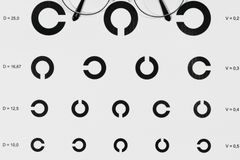
Eye pressure, visual field testing and optic nerve assessment for glaucoma.
Retinal examination and increasingly retinal imaging.
Lens assessment for cataract.
Signs of hypertension and diabetes in the retinal vessels.
And, rarely, signs of neurological conditions.
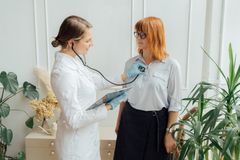
Which makes an eye test a general health check that happens to include a prescription, and one that is free or subsidised for many groups.
Practical protection
What actually helps.
Attend eye examinations at the recommended interval, and annually if you have diabetes, glaucoma, a family history or are over a certain age.
Do not smoke, which is the largest modifiable factor for macular degeneration and contributes to several other conditions.
Control blood pressure and glucose.
Wear genuine ultraviolet-filtering sunglasses, since dark lenses without filtering dilate the pupil and are worse than none.
Take glaucoma drops as prescribed, which is where treatment most commonly fails.
And act urgently on the warning symptoms: sudden vision loss, new flashes and floaters, a shadow across vision, distortion of straight lines, or a painful red eye.
General information only, not medical advice. Seek urgent care for sudden vision loss, new flashes and floaters, a painful red eye, or distortion of straight lines.
Also by Dr Samuel Adeyemi
- Dental emergencies and what to doDental & Vision
- Overdiagnosis, and why more medicine is not always betterScreening & Checks
- Mouth ulcers, bad breath and the small thingsDental & Vision
- Dry eye, contact lenses and daily eye careDental & Vision