Food & Budget
Fibre, and why it is the nutrient that matters most
Intakes are below recommendations almost everywhere, the evidence is unusually strong, and the sources are cheap.
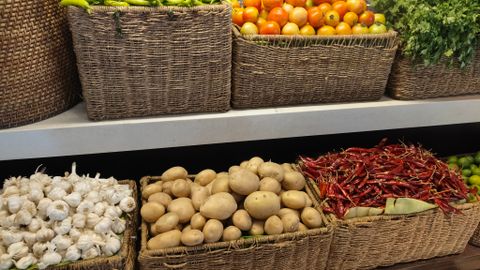
If there is a single nutrient where increasing intake would produce measurable population health benefit, the evidence points at fibre.
What the evidence shows
Unusually consistent for nutritional epidemiology.
A major systematic review and meta-analysis commissioned to inform guidelines found dose-response relationships between higher fibre intake and reduced all-cause mortality, cardiovascular disease, stroke, type 2 diabetes and colorectal cancer.
The relationships were graded, with benefit continuing to increase across the range studied.
Whole grains showed similar patterns.
Which is a stronger and more consistent picture than for most individual nutrients.
How much and how far below
Recommendations sit at around thirty grams a day for adults in several countries, with variation.
Average intakes in most high-income populations are substantially below this, frequently around half to two-thirds.
Which means most people would benefit from increasing it, without any need for precision about the exact target.
The types and what they do
A useful distinction.
Soluble fibre — in oats, barley, pulses, apples, citrus and psyllium — forms a gel, slows digestion, lowers LDL cholesterol and moderates glucose response.
Insoluble fibre — in wholegrains, bran, nuts and vegetable skins — adds bulk and speeds transit, which addresses constipation.
Resistant starch — in cooled cooked potatoes and rice, green bananas and pulses — is fermented in the colon and produces short-chain fatty acids.
Most foods contain a mixture, which is why variety matters more than targeting a type.
The cheapest sources
Which are among the cheapest foods available.
Pulses: lentils, beans and chickpeas, dried or tinned, with very high fibre per unit cost.
Oats.
Wholemeal bread and pasta, which cost marginally more than refined versions.
Brown rice and other wholegrains.
Frozen vegetables and peas.
Potatoes with skins.
Tinned and frozen fruit.
Nuts and seeds, which are more expensive per gram and used in small amounts.
And bran added to cereals and baking, which is inexpensive.
Increasing it without problems
Where people go wrong.
Increase gradually over weeks, since a sudden increase produces bloating, wind and discomfort — which is the most common reason people conclude that fibre does not suit them.
Increase fluid alongside, since fibre requires water to work and increasing it without fluid can worsen constipation.
Spread it across the day rather than concentrating it.
And expect an adjustment period, since the gut microbiome adapts over weeks.
Practical swaps
Small changes with meaningful effect.
Wholemeal instead of white bread.
Oats or a high-fibre cereal instead of a low-fibre one, checking the label for grams per hundred grams.
Leaving skins on potatoes, carrots and apples.
Adding a tin of pulses to any stew, soup, curry or sauce, which also reduces the cost of the meal.
Adding frozen peas or beans to anything.
Nuts or seeds on cereal, yoghurt or salad.
Fruit as a snack instead of a processed one.
And using pulses to replace part of the meat in mince-based dishes, which improves the fibre and the cost simultaneously.
Where fibre is not appropriate
Specific situations.
Certain gastrointestinal conditions, including during flares of inflammatory bowel disease and with strictures, where low-residue diets are used temporarily on medical advice.
Before some investigations.
In irritable bowel syndrome, where insoluble fibre can worsen symptoms while soluble fibre frequently helps, and where a supervised low-FODMAP approach may be used temporarily.
And in anyone with swallowing difficulty, where texture modification applies.
These are reasons for individualised advice rather than for general avoidance.
Fibre supplements
Which have a place.
Psyllium has reasonable evidence for cholesterol, constipation and irritable bowel symptoms.
They are useful where dietary intake cannot be increased sufficiently.
They do not replicate the full package of a fibre-rich diet, which includes micronutrients, phytochemicals and the effect of displacing other foods.
And they cost more per gram of fibre than pulses by a wide margin.
The bowel screening connection
Worth linking.
Fibre intake is associated with reduced colorectal cancer risk, and bowel screening detects it early.
Together these are the two most effective actions available for a cancer that is common and highly treatable when caught early.
Both are cheap, and both are under-used.
General information only, not medical or nutritional advice. Consult a qualified dietitian or clinician about fibre intake if you have a gastrointestinal condition.
Also by Oliver Nkemdi
- Cooking skills that save the most moneyFood & Budget
- What fitness trackers can and cannot tell youFitness & Movement
- Exercise with a long-term conditionFitness & Movement
- Growing food and other ways to cut the billFood & Budget