Food & Budget
Growing food and other ways to cut the bill
Some crops genuinely pay for themselves and most do not, and the other savings are larger than the garden.
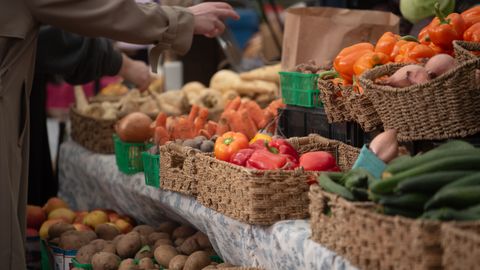
Growing food is frequently presented as a money-saving strategy, and the arithmetic depends entirely on what is grown.
What genuinely pays
Crops that are expensive to buy, quick to grow and used in small quantities.
Herbs, by a wide margin the best return — a supermarket packet costs a meaningful sum and lasts days, while a plant costs little and produces for months or years.
Mint, chives, thyme, rosemary, sage and parsley all grow in pots.
Salad leaves, which are expensive, perish quickly and can be cut repeatedly.
Spring onions and radishes, fast and cheap to grow.
Tomatoes, where the flavour difference is substantial and the yield from a few plants is meaningful.
Courgettes and beans, which produce heavily from little space.
Soft fruit — raspberries, blackcurrants — which is expensive to buy and productive for years from one planting.
Chillies, which produce far more than most households use.
What does not pay
Where buying is cheaper.
Potatoes, onions and carrots, which are among the cheapest vegetables available and which take substantial space for a modest yield.
Anything requiring a heated greenhouse.
Crops with a long occupation of ground for a single harvest.
And anything that requires equipment, compost and containers bought new, where the setup cost exceeds several years of purchases.
Which does not mean not growing them — enjoyment, quality and the activity itself are legitimate reasons — but they should not be justified financially.
Doing it cheaply
Where the setup cost can be avoided.
Seeds cost a fraction of plants and one packet contains many.
Seed swaps and libraries exist in many areas.
Containers can be reused: buckets, boxes, anything with drainage.
Compost from household waste, where space allows, replaces bought compost.
Cuttings and divisions from other people's plants cost nothing.
And windowsills, balconies and doorsteps grow herbs and salad without any ground at all.
Community routes
Frequently better value than a garden.
Allotments, where waiting lists vary and rents are typically low.
Community gardens and growing projects, which provide land, tools, knowledge and company.
Community orchards.
Food-growing schemes run by councils and charities.
Gleaning projects, which collect surplus commercial produce.
And community fridges and food-sharing apps, which redistribute surplus and which are used by many people who are not in financial hardship.
The other savings that are larger
Worth stating plainly.
Reducing household food waste saves substantially more for most households than growing ever will, and requires only planning and storage.
Buying dried rather than tinned pulses.
Cooking from ingredients rather than buying prepared food.
Shopping with a list from a plan.
Checking unit prices.
Using discount retailers and international grocers for staples.
And batch cooking, which prevents the convenience purchases that dominate the difference between households.
Foraging
Free and requiring caution.
Common and safely identifiable items — blackberries, elderflowers, sloes, wild garlic, nettles — are abundant in season.
The essential rules: be certain of identification, since several dangerous species resemble edible ones, and fungi in particular kill people every year; avoid roadsides and contaminated ground; take only a small proportion and leave plenty; and know the law, since foraging rights differ by country and by land ownership.
Guided foraging walks are a reasonable way to learn.
And no plant or fungus should be eaten on the basis of an app identification alone.
Preserving
Which extends whatever you obtain.
Freezing, which is the simplest and works for most vegetables after blanching, for fruit, and for herbs in oil.
Drying for herbs and chillies.
Pickling, jams and chutneys for gluts.
And fermentation, which requires care with method and is inexpensive.
Follow tested recipes and food safety guidance, particularly for anything canned or bottled, where botulism risk is real with improper method.
The realistic assessment
Growing food produces a modest financial saving, an excellent yield of herbs and salad, better-tasting produce, physical activity, time outdoors and, in the mental health literature, measurable wellbeing benefits from gardening.
Which is a good set of returns even if the vegetables cost more than the shop version.
The financial case is strongest for herbs on a windowsill and for anyone with access to an allotment or community plot.
General information only, not medical or nutritional advice. Never eat foraged plants or fungi without certain identification, and follow tested recipes and food safety guidance for preserving.
Also by Oliver Nkemdi
- Cooking skills that save the most moneyFood & Budget
- What fitness trackers can and cannot tell youFitness & Movement
- Fibre, and why it is the nutrient that matters mostFood & Budget
- Exercise with a long-term conditionFitness & Movement