Fitness & Movement
How Balance Is Trained And Why It Declines
Balance depends on three sensory systems feeding a rapid correction loop, and it declines with age because each input degrades while the corrections needed grow slower.
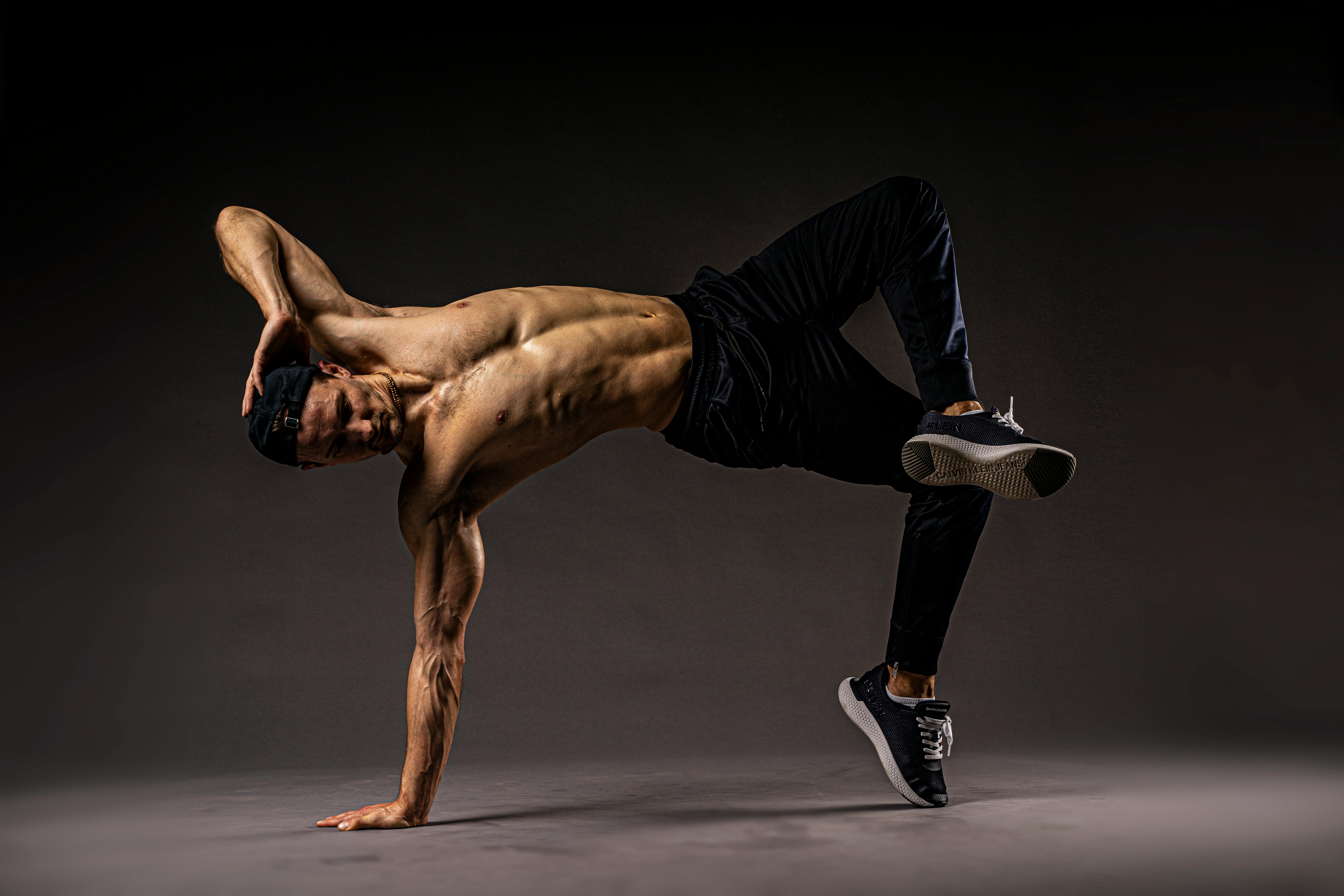
Balance feels like a single ability and is actually the output of several systems working together. Understanding which parts degrade explains why balance training works and what it should involve.
Three sensory systems supply the information
The inner ear detects head rotation and linear acceleration, providing information about orientation and movement independent of vision.
Vision supplies a reference for where vertical is and how the body is moving relative to the surroundings, which is why standing on one leg is harder with eyes closed.
Proprioception, the sense of joint position and muscle tension, reports body configuration continuously, with the feet and ankles particularly important for standing balance.
The brain resolves conflicts between them
The three inputs are weighted against each other, and the weighting shifts depending on which is most reliable in a given situation.
On an unstable surface, proprioceptive information becomes less useful and the system leans more on vision and the inner ear.
Conflict between inputs produces the disorientation felt on a moving vehicle, where the inner ear reports motion that vision does not confirm.
Correction depends on speed as much as sensing
Standing upright is a continuous process of small corrections, since the body is inherently unstable over a small base.
The correction requires detecting a deviation, selecting a response and producing force quickly enough to matter, which places the demand on rapid force production rather than on maximum strength.
Power in the leg muscles declines faster than strength with age, which is why balance recovery deteriorates before anything else becomes obviously weaker.
Each component degrades with age
Inner ear function declines gradually, vision changes in both acuity and contrast sensitivity, and sensation in the feet reduces, particularly where circulation or nerves are affected.
Several common medications also affect balance directly, and taking multiple such medicines compounds the effect.
The result is a system with less reliable input and slower output, which is why falls risk rises steeply rather than gradually with age.
Training works by challenging the loop
Balance improves with practice that puts the system near its limit, such as narrowing the base of support, removing visual input or standing on a compliant surface.
Adding a second task, such as counting or carrying something, trains the situation in which most real falls occur.
Anyone who has fallen, feels unsteady or is on several medications should be assessed properly, since falls risk has identifiable and often treatable causes.
Also by Renata Fiore
- Deciding what to spend on your healthBills & Access
- Workplace health benefits people never useBills & Access
- Choosing between public and private treatmentBills & Access
- End-of-life planning and its practical costsBills & Access