Fitness & Movement
Sitting, standing and moving at work
Prolonged sitting is a genuine risk factor, standing desks are not the answer, and the effective intervention is free.
Sedentary behaviour has been studied intensively over the past two decades, and the findings support a more specific conclusion than the headlines suggest.
What the evidence shows
Prolonged sedentary time is associated in cohort studies with cardiovascular disease, type 2 diabetes and mortality.
Importantly, the association is substantially attenuated in people who meet physical activity guidelines — large pooled analyses have found that sufficient moderate-to-vigorous activity largely offsets the risk associated with long sitting hours.
Which reframes the message: prolonged sitting is a problem principally for people who are otherwise inactive.
Breaking up sitting with short bouts of activity has evidence for improving glucose and insulin responses in experimental studies, though long-term outcome evidence is thinner.
Standing desks
Where the enthusiasm outran the data.
Trials of sit-stand desks show that they reduce sitting time, which is the outcome they are designed for.
Evidence that they improve cardiometabolic health outcomes is limited.
Standing itself burns only marginally more energy than sitting, which makes claims about weight effects implausible.
Prolonged standing has its own problems, including lower limb discomfort, varicose veins and back pain in occupations requiring it.
The reasonable conclusion: alternating between sitting and standing is better than either alone, and movement is better than both.
What actually helps
Cheap and effective.
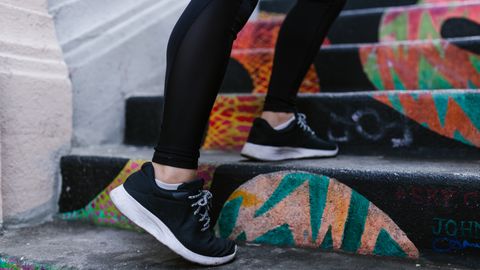
Breaking up prolonged sitting every half hour or so with a couple of minutes of movement — standing, walking to fill a water glass, using stairs.
Walking meetings and phone calls taken while walking.
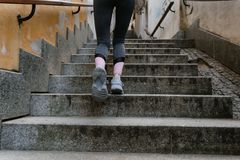
Using stairs rather than lifts, which is one of the few genuinely free interventions with measurable fitness effects.
Walking or cycling part of the commute.
Parking further away, or getting off transport a stop early.
A lunchtime walk, which also has evidence for afternoon mood and alertness.
And meeting the physical activity guidelines outside work, which is what does most of the work in the risk data.
Posture and pain
Where advice has changed.
The evidence linking a specific sitting posture to back or neck pain is weaker than commonly assumed, and studies have generally not found that correcting posture prevents pain.
What is more consistently associated with discomfort is staying in one position for prolonged periods, whatever the position.
Which supports variation rather than perfection: change position frequently, use different chairs, alternate tasks.
Ergonomic setup still matters for comfort and for specific problems — screen height, arm support, chair adjustment — and it is a comfort intervention rather than a cure for pain.
A workable desk setup
The basics.
Screen at arm's length with the top at or slightly below eye level, positioned to avoid glare.
Chair adjusted so feet are flat and thighs roughly horizontal, with lower back supported.
Forearms roughly horizontal with shoulders relaxed.
Keyboard and mouse close enough not to reach.
Laptop users need either a separate keyboard or a stand, since a laptop cannot have both screen and keyboard in the right place.
And a footrest if the chair height for arm position leaves feet unsupported.
Employers in many countries have legal obligations regarding display screen equipment assessments, which employees frequently do not know they can request.
Working from home
Where setups are frequently worse and movement lower.
The commute, however unwelcome, provided incidental activity that home working removes entirely.
Practical responses: a deliberate walk at the start and end of the working day, which also marks the boundary; a designated workspace rather than a sofa; and scheduled breaks, since the natural interruptions of an office are absent.
Employer obligations regarding home workstations vary and frequently include some support for equipment.
For jobs that are not sedentary
The opposite problem.
Occupational physical activity is not equivalent to leisure-time activity in the health data, and some studies find an occupational physical activity paradox in which high physical work is associated with worse cardiovascular outcomes.
Proposed explanations include insufficient recovery, low intensity sustained over long periods, static loading and lower control over the work.
Which means manual workers are not exempt from the recommendation to be active, and their needs are different: recovery, variation and strength training rather than more volume.
What is worth spending money on
Modest.
A chair that can be adjusted properly, which is the item with the clearest comfort benefit.
A laptop stand and separate keyboard for anyone using a laptop for long periods.
Shoes appropriate for standing occupations.
And essentially nothing else, since the effective intervention is behaviour rather than equipment.
General information only, not medical advice. Consult a qualified clinician about persistent musculoskeletal pain, and ask your employer about workstation assessments.
Also by Oliver Nkemdi
- Cooking skills that save the most moneyFood & Budget
- What fitness trackers can and cannot tell youFitness & Movement
- Fibre, and why it is the nutrient that matters mostFood & Budget
- Exercise with a long-term conditionFitness & Movement