Dental & Vision
Why Gum Disease Stays Painless Until Late
Periodontal disease destroys the attachment holding teeth in place without producing pain, which is why it is usually detected by measurement rather than by symptoms.
Gum disease is the most common reason adults lose teeth, and it progresses for years without hurting. The absence of pain is a feature of the mechanism rather than a coincidence.
The damage happens below the visible gum
Teeth are held by fibres attaching them to bone, covered by gum tissue. Disease affects that attachment apparatus rather than the tooth itself.
The tooth has nerves inside it, but the process destroying its support does not involve the nerve, so the usual signal of dental trouble is absent.
Bone loss around a tooth is similarly silent. Bone does not report gradual resorption, which is why it is also true of osteoporosis elsewhere in the body.
Inflammation is chronic rather than acute
The immune response to bacteria at the gum margin is persistent and low grade, which does not produce the sharp signalling of acute inflammation.
The tissue destruction is largely caused by that immune response rather than directly by the bacteria, which is why susceptibility varies so much between people with similar plaque levels.
Smoking complicates matters further by reducing blood flow to the gums, which suppresses bleeding and removes the one warning sign most people would notice.
Pockets form and are measured, not felt
As attachment is lost, the space between gum and tooth deepens into a pocket, which harbours bacteria in a place brushing cannot reach.
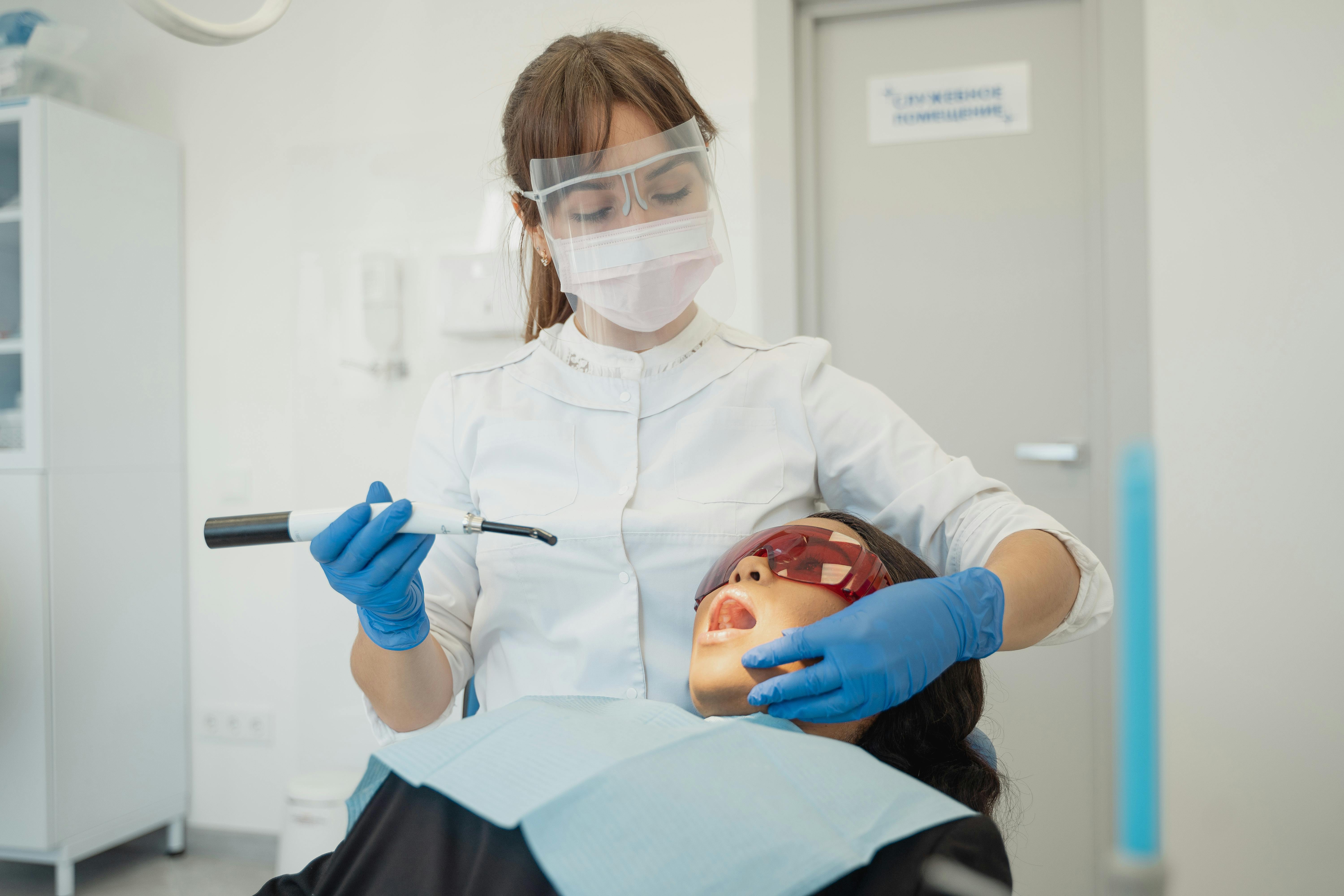
Dentists and hygienists measure these depths with a graduated probe at multiple points around each tooth, which is the tapping and number-calling during an examination.
That measurement is the primary diagnostic tool, because the depth records cumulative loss in a way that appearance does not.
Symptoms arrive after substantial loss
Bleeding when brushing is the earliest common sign and is often dismissed as normal or as evidence of brushing too hard.
Looseness, movement and changes in how teeth meet appear only once a large proportion of support has already gone.
By that stage, treatment aims to stabilise what remains rather than to recover the attachment, since lost attachment does not regenerate in ordinary circumstances.
Why this shapes check-up intervals
Recall intervals are set on individual risk, and a history of periodontal disease is one of the strongest factors pushing them shorter.
The point of frequent review is to detect change in the measurements before it becomes structurally significant.
Anyone noticing bleeding gums, persistent bad taste or movement in a tooth has a reason to be examined rather than to wait for discomfort that may never arrive.
Also by Renata Fiore
- Deciding what to spend on your healthBills & Access
- Workplace health benefits people never useBills & Access
- Choosing between public and private treatmentBills & Access
- End-of-life planning and its practical costsBills & Access