Food & Budget
Batch cooking as a financial strategy
The saving comes from what it prevents rather than from the cooking itself — chiefly the expensive decision made at seven in the evening.
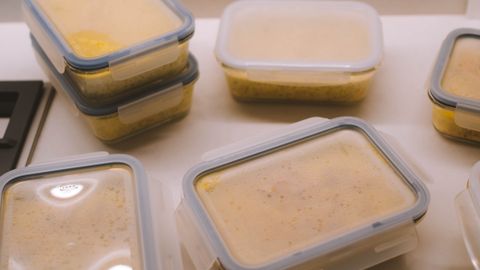
Batch cooking is generally presented as a time saver, and its main financial effect is preventing the expensive decision made at seven in the evening when there is nothing in the house.
Where the saving actually is
Three mechanisms.
Buying in larger, cheaper units and using all of it, rather than buying small packs.
Using one heating cycle for several meals, which matters where energy costs are high.
And, by far the largest, replacing takeaway and convenience purchases on the evenings when cooking is impossible.
The third of these dwarfs the other two, which means the point of batch cooking is not the food produced but the option it creates.
What to cook
The things that survive the process.
Stews, curries, chilli, bolognese and other sauces, which frequently improve after a day.
Soups.
Pulse-based dishes, which freeze extremely well.
Cooked grains, which freeze and reheat.
Stock from bones and vegetable trimmings.
Portions of roasted vegetables and cooked meat.
Bread dough, and baked bread.
And components rather than complete meals — cooked onions, a tomato base, cooked pulses — which are more flexible than finished dishes and prevent the boredom that kills the habit.
What does not work
Worth knowing before wasting an afternoon.
Anything relying on crisp texture.
Salad and raw vegetables with high water content, which collapse.
Cream-based sauces, which frequently split — though they can be added on reheating.
Potatoes in some forms, which become grainy.
Fried food.
Egg-based dishes in some preparations.
And anything already reheated once.
The safety part
Which becomes more important with larger volumes, because they cool more slowly.
Cool food quickly and refrigerate or freeze within about two hours: divide into shallow containers rather than cooling one deep pot, and stand the pan in cold water.
Leave containers uncovered until cool, then cover.
Freeze in portion sizes you will actually use.
Label everything with contents and date, since unlabelled frozen containers become an archaeological problem.
Reheat thoroughly until piping hot throughout, and only once.
Take particular care with rice, which should be cooled fast, refrigerated promptly and reheated once only.
And follow storage duration guidance rather than assuming the freezer preserves indefinitely — food remains safe and deteriorates in quality.
The system that works
Practically.
Cook double or triple whenever you cook something suitable, rather than dedicating a whole day, which most people do once and never repeat.
Keep a written list of what is in the freezer, on the door, updated when things go in and out.
Without it, the freezer becomes storage rather than a resource, which is the most common failure.
Freeze flat in bags where possible, which stacks efficiently and thaws faster.
Keep a designated shelf for things to be used soon.
And plan one week a month to eat from the freezer, which prevents accumulation and forces rotation.
Equipment worth having
Modest and useful.
A large heavy pot, which is the single most useful item.
Stackable containers of consistent sizes, or reusable bags.
A labelling method, which can be tape and a pen.
And optionally a slow cooker, which is cheap to buy and cheap to run, suits inexpensive cuts, and can be left unattended — which is a genuine advantage for anyone out all day.
The store cupboard alongside
Which covers the gaps.
A batch-cooked freezer plus a stocked cupboard means that a meal is always possible without shopping.
The cupboard items that matter: pasta, rice, tinned tomatoes, tinned pulses, tinned fish, stock, oil, onions, garlic and a few flavourings.
Together these produce a meal in under half an hour with nothing fresh in the house, which is the situation that produces most convenience spending.
The honest limitations
Worth acknowledging.
It requires freezer space, which not everyone has.
It requires an afternoon or the habit of cooking extra, which requires energy that is not always available.
It requires containers and a working freezer, which have upfront costs.
And it does not suit households where everyone eats different things at different times.
For households where it does fit, the annual saving is substantial and the main benefit is not financial at all — it is having something to eat on the evenings when cooking is not possible.
General information only, not medical or food safety advice. Follow national food safety guidance on cooling, storage and reheating.
Also by Oliver Nkemdi
- Cooking skills that save the most moneyFood & Budget
- What fitness trackers can and cannot tell youFitness & Movement
- Fibre, and why it is the nutrient that matters mostFood & Budget
- Exercise with a long-term conditionFitness & Movement