Food & Budget
Cost per nutrient rather than cost per meal
Some of the cheapest foods available are the most nutritionally dense, and the expensive diet is generally the processed one.
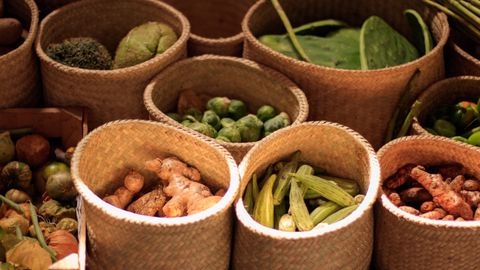
The assumption that eating well is expensive persists partly because the comparison is usually made against convenience food rather than against ingredients.
The foods that deliver most per unit of money
Consistently identified in nutrient-density-per-cost analyses.
Dried and tinned pulses: lentils, beans and chickpeas provide protein, fibre, iron, folate and potassium at among the lowest cost per gram of protein available.
Dried are cheaper than tinned and require soaking and time.
Eggs, a complete protein with a wide range of micronutrients, cheap and fast.
Oats, which are among the cheapest sources of energy and soluble fibre.
Frozen vegetables, frozen at harvest, nutritionally comparable to and frequently better than fresh produce that has travelled and sat, with no waste.
Tinned fish, particularly oily fish, which provides protein, omega-3 fats, vitamin D and calcium where bones are included.
Root vegetables and brassicas, cheap, filling and nutritionally substantial.
Milk and plain yoghurt, for protein, calcium and iodine.
Wholemeal bread and brown rice, which cost marginally more than refined versions and provide more fibre.
Peanut butter and other nut butters, at the cheaper end.
And cheaper cuts of meat, which have more flavour than expensive ones and need time rather than money.
Where the money leaks
The main sources of avoidable spending.
Food waste, which in many households is a substantial proportion of what is bought.
Prepared, portioned and pre-chopped foods, which carry a large premium for minutes of work.
Small pack sizes, where the unit price is frequently much higher — the shelf label shows this and almost nobody looks.
Branded staples where own-brand is functionally identical.
Convenience purchases made because there was nothing in the house.
Drinks and snacks, individually small and cumulatively large.
And meal delivery and takeaway, which is where the largest single difference in household food spending sits.
The planning that saves the most
Three habits with disproportionate effect.
Check what is already in the house before shopping, since a substantial proportion of purchases duplicate things already present.
Write a list from a rough plan and buy what is on it, which addresses both overspending and waste simultaneously.
Store food correctly and use the oldest first, which is the single largest waste reduction available.
Ten minutes a week covers all three.
Cooking cost
Which matters where energy is expensive.
Lids on pans, which cut cooking time and energy substantially.
Matching pan to ring size.
Using the smallest appropriate appliance — microwave, air fryer or slow cooker uses considerably less than a full oven for a small quantity.
Filling the oven when it is on.
Boiling only the water needed.
And batch cooking, which uses one heating cycle for several meals and which is discussed elsewhere on this site.
The nutritional priorities on a tight budget
What to protect if choices must be made.
Adequate protein, from pulses, eggs, dairy and cheaper animal sources.
Fibre, from wholegrains, pulses, fruit and vegetables — intakes are below recommendations in most populations and the association with cardiovascular disease, colorectal cancer and mortality is strong.
Fruit and vegetables in whatever form is affordable, including frozen, tinned in water or juice, and dried.
Iron and calcium sources.
Vitamin D, where supplementation is recommended in many countries for at least part of the year and costs very little.
And enough total energy, which is the point at which very restricted budgets cause the most harm.
Where to shop
Practical differences.
Discount retailers are genuinely cheaper for staples with a narrower range, which makes a split shop economical for many households.
Loyalty pricing has become significant in several markets, with substantial differences between member and non-member prices.
Markets late in the day, and reduced sections, where the plan can accommodate what is available.
Ethnic and international grocers, which are frequently substantially cheaper for pulses, rice, spices and vegetables.
And food co-operatives, community shops and social supermarkets, which exist in many areas.
The honest conclusion
Eating well on a limited budget is possible and requires time, cooking skill and equipment — which are not equally available to everyone.
Which means that advice framed purely as individual choice ignores real constraints on time, energy, transport, storage and cooking facilities.
Within those constraints, the foods above are the ones that deliver most, and the largest single saving available to most households is throwing less away.
General information only, not medical or nutritional advice. Consult a qualified clinician or dietitian about your own dietary requirements.
Also by Oliver Nkemdi
- Cooking skills that save the most moneyFood & Budget
- What fitness trackers can and cannot tell youFitness & Movement
- Fibre, and why it is the nutrient that matters mostFood & Budget
- Exercise with a long-term conditionFitness & Movement