Fitness & Movement
Home gym equipment worth owning
A very short list covers almost everything, and the expensive items are the ones that end up storing clothes.
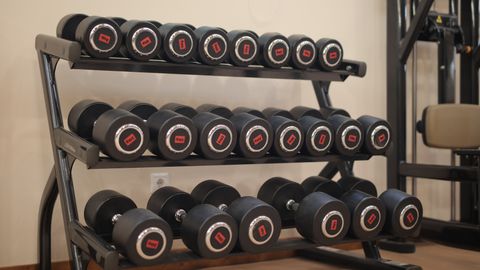
Home fitness equipment is bought in optimism and sold in resignation, which is why the second-hand market is so well supplied.
What is genuinely useful
In rough order of value per unit of money and space.
Nothing, since bodyweight training progresses a long way and costs nothing.
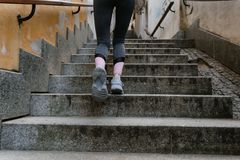
Squats, lunges, step-ups, press-up variations, planks, glute bridges and hip hinges cover most of the body.
Resistance bands, which are cheap, take no space, travel, and provide upper body pulling movements that bodyweight training struggles to cover.
A pull-up bar, which is inexpensive and provides the pulling pattern that is otherwise difficult at home.
Adjustable dumbbells, which cover an enormous range of exercises in the space of one item and which are the single most versatile purchase for most people.
A kettlebell or two, useful for hinge patterns, carries and conditioning.
A mat, which is trivial and makes floor work tolerable.
A step or sturdy box, which can be furniture.
And that is close to complete for general health and strength.
What is generally not worth it
The items that dominate the second-hand market.
Large multi-station machines, which take enormous space and restrict movement patterns.
Treadmills, unless you will genuinely use one and cannot go outside — they are expensive, heavy and the most commonly abandoned item.
Vibration plates, where evidence of meaningful benefit is limited.
Abdominal devices, which cannot spot-reduce fat, a point worth stating plainly since it underpins the entire category.
Electrical muscle stimulation belts.
Subscription equipment with proprietary content, where the ongoing cost frequently exceeds a gym membership.
And anything bought in January on the basis of an intention rather than an established habit.
Buying second-hand
Where the savings are largest.
Weights do not deteriorate and are heavily discounted second-hand, since they are bulky to move and hard to sell.
Benches, bars and racks similarly.
What to check: welds and stitching on benches, thread condition on adjustable dumbbells, and that any adjustable mechanism locks reliably.
Avoid second-hand items with electronic components and no warranty.
And check that the floor can take the load, which for heavy weights in an upper-floor flat is a genuine consideration.
The programme matters more than the equipment
The point that undermines most purchases.
Progressive overload — gradually increasing demand — is what produces adaptation.
Which can be achieved with more repetitions, slower tempo, harder variations, shorter rest or more load.
Only the last requires equipment.
Which means a person doing a structured bodyweight programme consistently will out-progress a person with a full home gym and no plan, which is the most common configuration.
Free programming
Available and good.
Public health services publish structured programmes in several countries.
Reputable strength coaches publish beginner programmes free.
Apps range from excellent to dangerous, and the distinguishing features are qualified authorship, sensible progression and attention to technique.
What to be wary of: programmes with extreme volume, no progression logic, or claims about specific body part reduction.
Space and practicality
The constraints people underestimate.
Measure the space you have, including ceiling height for overhead movements.
Consider noise and floor loading if you live in a flat.
Consider storage, since equipment that must be assembled and dismantled each time will not be used.
And place it somewhere you pass regularly, since visibility predicts use — equipment in a garage or spare room is used considerably less than equipment in a living space.
The honest calculation
Before buying anything.
Establish the habit for a month using nothing.
Then buy the cheapest thing that removes the actual limitation you have encountered.
Then repeat.
This sequence produces a small collection of well-used items rather than a large collection of unused ones, and it costs a fraction of the alternative.
And note that the total cost of the useful list above is comparable to a few months of gym membership, after which it is free.
General information only, not medical advice. Consult a qualified clinician before starting exercise if you have a medical condition, and seek instruction in technique for resistance training.
Also by Oliver Nkemdi
- Cooking skills that save the most moneyFood & Budget
- What fitness trackers can and cannot tell youFitness & Movement
- Fibre, and why it is the nutrient that matters mostFood & Budget
- Exercise with a long-term conditionFitness & Movement