Dental & Vision
Children’s teeth and eyes
Both are free or subsidised for children in most countries, both are under-attended, and both have windows where treatment works and later does not.
Dental decay and uncorrected vision problems are among the most common preventable conditions of childhood, and both have treatment windows that close.
Teeth: the numbers
Tooth decay remains one of the most common chronic conditions of childhood, and it is almost entirely preventable.
In several countries, dental extraction under general anaesthetic is among the most common reasons for hospital admission in young children, which is a striking indicator of a preventable problem being addressed at the most expensive possible point.
Decay causes pain, infection, missed school, disturbed sleep and, in the case of general anaesthetic, a procedure with its own risks.
The prevention
Simple and effective.
Brush twice daily from the eruption of the first tooth, with fluoride toothpaste at the concentration recommended for the age.
Spit out and do not rinse.
Adults should brush or supervise brushing until around seven years, since young children cannot do it effectively.
Reduce the frequency of sugar intake, which matters more than the quantity, since each exposure produces an acid attack.
Never put a child to bed with a bottle of anything other than water.
Move from bottles to a free-flow cup from around six months and stop bottles by around a year.
Water and plain milk between meals; sugary drinks and juice with meals only, if at all.
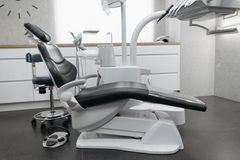
And attend a dentist from the first tooth or the first birthday, which is recommended and rarely done.
Additional preventive measures
Offered by dental services.
Fluoride varnish application, which has good evidence and is offered routinely in many countries.
Fissure sealants on permanent molars, which prevent decay in the grooves where it starts.
Higher-concentration fluoride toothpaste for children at higher risk, on prescription.
And supervised toothbrushing programmes in schools and nurseries, which have shown measurable reductions in decay in evaluations.
Eyes: the windows
Where timing is critical.
Amblyopia — reduced vision in one eye from lack of use during development — is treatable in early childhood and progressively less so later, with the effective window generally closing during primary school years.
It affects a meaningful proportion of children and is usually asymptomatic, since a child with one good eye sees perfectly well and does not know anything is wrong.
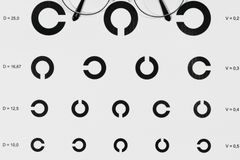
Which is why vision screening exists rather than relying on children reporting problems.
Causes include squint, unequal refractive error and anything obstructing vision such as a cataract or a droopy eyelid.
What to look for
Signs warranting an eye test.
A squint at any age beyond the first few months, or any constant squint.
Sitting very close to screens or holding books close.
Screwing up eyes, squinting or tilting the head.
Headaches or eye rubbing.
Clumsiness or difficulty with hand-eye tasks.
Difficulty at school that could be visual.
One eye that looks different in photographs, particularly a white rather than red reflection with a flash, which requires urgent assessment.
And any family history of childhood eye problems.
Myopia in children
A growing issue.
Rates of short-sightedness have risen substantially in many countries.
The best-supported protective factor is time spent outdoors in childhood, with the effect attributed to light intensity.
High myopia matters because it increases lifetime risk of retinal detachment, glaucoma and macular disease.
Myopia control interventions — specific spectacle lenses, contact lenses and low-dose atropine — now have reasonable evidence for slowing progression, and are available privately in many places and increasingly through eye services.
Which makes an early conversation worthwhile for a child whose prescription is progressing rapidly.
Cost and access
Where the news is good and take-up is poor.
Children's dental care and eye tests are free or subsidised in many countries, and spectacle vouchers or subsidies exist for children in several.
School screening programmes exist in some places and not others, and a normal school screening does not replace a full eye examination.
Which means the main barrier is attendance rather than money — and the consequences of non-attendance are visible years later, in extractions and in permanently reduced vision in one eye.
The habits that carry forward
Worth stating.
Children who attend the dentist regularly from a young age are far more likely to continue as adults and are less anxious about it.
Children who wear glasses as prescribed generally accept them readily when the reason is explained.
And the toothbrushing routine established in early childhood is the one that persists.
All three are established before school age, which makes the first years disproportionately important for lifetime cost as well as health.
General information only, not medical or dental advice. Consult a qualified dentist and optometrist about your child, and seek urgent assessment for a white pupil reflection or constant squint.
Also by Dr Samuel Adeyemi
- Dental emergencies and what to doDental & Vision
- Overdiagnosis, and why more medicine is not always betterScreening & Checks
- Mouth ulcers, bad breath and the small thingsDental & Vision
- Dry eye, contact lenses and daily eye careDental & Vision