Dental & Vision
What a dental check-up prevents
Dental disease is almost entirely preventable and among the most expensive things to leave alone.
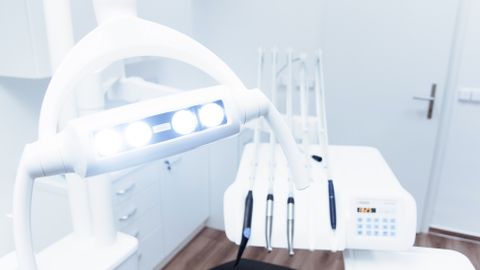
Dentistry is where the gap between the cost of prevention and the cost of treatment is widest, and where avoidance for financial reasons most reliably backfires.
The cost curve
The progression is well defined.
Prevention — brushing, interdental cleaning and periodic examination — costs very little.
A small filling costs modestly.
A large filling costs more.
A root canal treatment and crown costs several times that.
An extraction is cheaper in the short term and creates a gap.
Replacing that gap with a bridge or an implant is among the most expensive routine dental procedures there is.
Which means that each step of delay multiplies the eventual bill, and the multiplication is steep.
What is actually checked
More than teeth.
Decay, including between teeth where it is invisible without radiographs.
Gum health and pocket depths, which detect periodontal disease before teeth loosen.
Existing restorations and whether they are failing.
Soft tissues, including a check for oral cancer — a genuinely important part of the examination, since early detection substantially affects survival and lesions are painless early.
Bite, wear and signs of grinding.
And in children, development and eruption.
How often
Less often than the traditional six months for many people.
Guidance in several countries now recommends risk-based intervals, which for a low-risk adult with good oral health may be up to two years and for a high-risk patient may be every three months.
Risk factors include smoking, high sugar intake, dry mouth, diabetes, previous periodontal disease and a history of frequent decay.
Which means asking what your risk-based interval is, rather than assuming six months, is a legitimate cost saving with clinical backing.
Gum disease
The most common reason adults lose teeth, and largely silent.
Gingivitis — bleeding, inflamed gums — is reversible with better cleaning.
Periodontitis, where supporting bone is lost, is not reversible, though progression can be stopped.
Bleeding when brushing is the earliest sign and is almost universally interpreted as a reason to brush more gently, which is exactly wrong.
The association between periodontal disease and diabetes is bidirectional and well established, with treatment of gum disease improving glycaemic markers in trials — which makes it relevant well beyond the mouth.
The prevention that actually works
Unglamorous and cheap.
Brush twice daily with fluoride toothpaste for two minutes, with attention to the gum margin.
Spit, do not rinse, which keeps fluoride in contact with the teeth and which almost nobody is told.
Clean between the teeth daily, with interdental brushes where the gaps allow, which outperform floss for most adults.
Reduce the frequency of sugar intake rather than only the amount, since each exposure produces an acid attack.
Do not brush immediately after acidic food or drink.
Do not smoke, which is a major risk factor for periodontal disease and oral cancer and which masks bleeding.
And use a higher-fluoride toothpaste if prescribed, which is inexpensive and effective for those at higher risk.
What is not worth buying
Where money goes to no effect.
Charcoal toothpastes, which are abrasive and frequently lack fluoride, the ingredient that does the work.
Fluoride-free toothpaste.
Mouthwash used immediately after brushing, which washes the fluoride away.
Whitening products of uncertain provenance, where unregulated products have contained peroxide at concentrations restricted for good reason.
Electric toothbrushes at the top of the price range, where the evidence supports oscillating-rotating technology over manual brushing and does not support the most expensive models over cheaper ones with the same action.
And any product promising to reverse decay, which cannot be done once cavitated.
Access and cost
The genuine barrier for many people.
Public dental provision varies enormously between countries and is frequently limited, with cost the most commonly cited reason for not attending.
Options worth knowing: emergency dental services, which exist even where routine care is unavailable; dental schools, which provide supervised treatment at substantially reduced cost; payment plans and dental capitation schemes; and charitable and community clinics.
Checking entitlement to exemptions or subsidies, which cover pregnancy, low income, certain benefits and age groups in many systems.
And treating pain promptly, since dental infection can become serious and the emergency treatment of a dental abscess is considerably more expensive and unpleasant than the filling that would have prevented it.
General information only, not medical or dental advice. Consult a qualified dentist about your oral health and appropriate check-up intervals.
Also by Dr Samuel Adeyemi
- Dental emergencies and what to doDental & Vision
- Overdiagnosis, and why more medicine is not always betterScreening & Checks
- Mouth ulcers, bad breath and the small thingsDental & Vision
- Dry eye, contact lenses and daily eye careDental & Vision