Dental & Vision
Root canals, crowns and knowing what you are being sold
Dental treatment plans frequently contain choices, and knowing which parts are necessary changes the bill considerably.
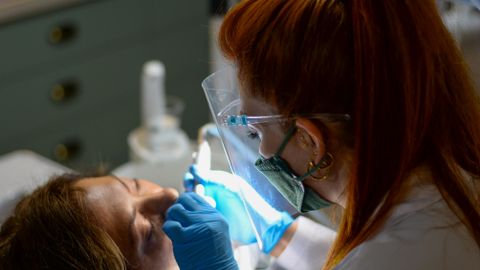
A treatment plan is a clinical recommendation and frequently contains options, and patients rarely know which items are essential and which are elective.
The main procedures and what they do
Filling: removing decay and restoring the tooth.
Composite is tooth-coloured, amalgam is durable and being phased down internationally for environmental reasons.
Both are clinically acceptable in appropriate situations.
Root canal treatment: removing infected or dead pulp from inside the tooth and sealing it.
Success rates are high, and it saves a tooth that would otherwise be extracted.
It generally requires a crown afterwards on back teeth, which is where a substantial part of the cost sits.
Crown: a covering restoring a heavily damaged tooth.
Materials vary in cost and appearance, and metal-ceramic and full ceramic options differ in durability by location.
Extraction: removing the tooth.
Cheaper immediately, and creating a gap that may cause drifting, bite changes and bone loss.
Bridge, denture or implant to replace a missing tooth, in ascending order of cost, with implants the most expensive and generally the most durable.
Where the choices are
What is worth asking.
Is there more than one clinically acceptable option here, and what are they?
What happens if I do nothing, or wait?
Is this urgent or elective?
What is the expected lifespan of each option?
Which parts are functional and which are cosmetic?
Can this be staged over time?
And what is the total cost including any follow-up appointments and materials?
A written treatment plan with itemised costs should be provided, and requesting one is standard rather than awkward.
Root canal versus extraction
The most common significant decision.
Root canal treatment plus a crown costs substantially more upfront than an extraction.
Extraction leaves a gap, and replacing that gap later costs more than the root canal would have.
Leaving the gap has consequences for adjacent teeth and bite over time, though a single missing back tooth is sometimes reasonable to leave.
Which means the honest comparison is between the total lifetime cost of each path rather than the immediate price.
The exception: a tooth with insufficient remaining structure, severe periodontal disease or a fracture may not be restorable, in which case extraction is the appropriate treatment rather than the cheap one.
Second opinions
Reasonable and underused.
Appropriate where a plan is extensive, expensive, involves multiple extractions, or where the recommendation feels disproportionate to your symptoms.
Take your radiographs with you, which you are entitled to request, since repeating them costs money and radiation exposure.
A second opinion is not an accusation, and most dentists are unconcerned by them.
Variation in treatment recommendations between dentists is documented and real, particularly for borderline decisions about restoration versus monitoring.
Cosmetic dentistry
Where the line between health and appearance blurs.
Whitening, veneers, composite bonding and orthodontics for appearance are elective, and should be described as such.
Veneers require irreversible removal of tooth structure, which is a significant and permanent decision frequently presented as a straightforward cosmetic one.
Whitening by unregulated providers is restricted in many countries for good reason, since high-concentration peroxide causes soft tissue damage.
Direct-to-consumer orthodontic aligners without in-person examination have generated substantial regulatory concern, since orthodontic movement without assessment of periodontal health and root position can cause serious harm.
And any treatment offered without an examination, radiographs and a periodontal assessment should be treated with caution.
Emergency treatment
Which people delay for cost reasons.
Dental pain, swelling and infection are not conditions to wait out.
Facial swelling, difficulty swallowing or opening the mouth, and swelling around the eye or under the jaw are emergencies requiring immediate medical attention, since dental infections can spread to spaces where they become life-threatening.
Emergency dental services exist in most countries even where routine care is difficult to access.
Antibiotics alone do not treat a dental infection — they buy time, and the source must be addressed.
Reducing the total cost
Practically.
Prevention, which is where the entire economic argument lies.
Attending at your risk-based interval rather than only when in pain.
Treating small problems early, since the cost curve is steep.
Asking about staging and payment plans.
Considering dental schools for extensive work, where treatment is supervised and substantially cheaper.
Checking exemptions and public provision.
And addressing grinding, dry mouth and gum disease, which are the underlying drivers of much expensive restorative work.
General information only, not dental advice. Consult a qualified dentist about treatment options, and seek emergency care for facial swelling or difficulty swallowing.
Also by Dr Samuel Adeyemi
- Dental emergencies and what to doDental & Vision
- Overdiagnosis, and why more medicine is not always betterScreening & Checks
- Mouth ulcers, bad breath and the small thingsDental & Vision
- Dry eye, contact lenses and daily eye careDental & Vision