Fitness & Movement
Exercise that costs nothing
The gym membership is the least important variable, and the evidence for the free options is as good as for anything.
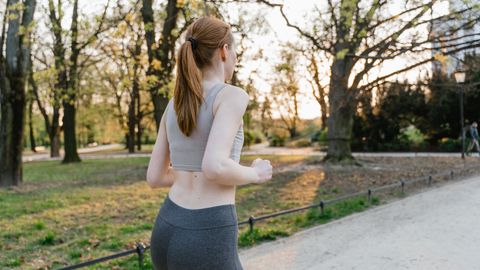
The fitness industry sells access, equipment and programming, and almost none of the health benefit of physical activity depends on any of them.
What the guidelines actually ask for
Physical activity guidelines in most countries converge on a similar target for adults.
Around 150 to 300 minutes a week of moderate-intensity activity, or 75 to 150 minutes of vigorous activity, or a combination.
Muscle-strengthening activity on at least two days a week.
And reducing prolonged sedentary time.
Importantly, recent guidance emphasises that any activity is better than none, that the largest gains come from moving from very little to some, and that the previous requirement for bouts of at least ten minutes has been dropped — activity of any duration counts.
Walking
The single most accessible intervention available.
Cohort studies consistently associate higher daily step counts with lower all-cause and cardiovascular mortality, with benefit appearing well below the widely quoted ten thousand and with the curve flattening at higher counts.
The ten thousand figure originated in marketing rather than research.
Meaningful benefit appears in studies at counts in the region of four to seven thousand steps a day for older adults, and somewhat higher for younger ones.
Pace matters as well as volume, with faster walking associated with additional benefit.
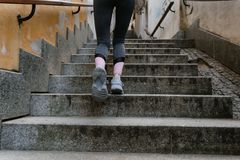
Practical version: walk somewhere you would otherwise drive, get off transport a stop early, take stairs, and take a walk at a fixed time each day.
Strength without equipment
The half of the guidelines most often ignored.
Muscle mass declines with age from midlife, and resistance training is the main countermeasure, with implications for metabolic health, bone density, balance and independence in later life.
Bodyweight exercises cover most of it: squats, lunges, step-ups, press-ups in whatever variation you can do, rows using a table or a bag, hip hinges, planks and glute bridges.
Progression is what produces adaptation, and it can come from more repetitions, slower tempo, harder variations or shorter rest rather than from more weight.
Two sessions a week covering the major muscle groups meets the guideline.
Household objects — bags of rice, water containers, a rucksack loaded with books — provide load for very little money.
Free structured options
Worth knowing about.
Free timed community runs and walks operate in many countries at no cost.
Public parks with outdoor gym equipment.
Free online workout programmes, which range from excellent to dangerous — favouring those produced by qualified professionals with sensible progressions.
Public health service exercise referral schemes, which provide subsidised or free supervised activity for people with certain conditions and which are under-used.
Walking and cycling for transport, which is the most sustainable form of activity because it is not an additional commitment.
Library-borrowed equipment and community sports clubs, which are frequently far cheaper than commercial alternatives.
The gym question
An honest assessment.
A gym provides equipment, structure, expertise and, for some people, the commitment that comes from paying.
It does not provide anything that is required for health benefit.
Industry data consistently shows a substantial proportion of members attending rarely or not at all, with January sign-ups falling away within weeks.
Which makes the honest question not whether a gym is good but whether you will go — and the evidence for that is your own history rather than your intention.
A reasonable approach is to establish the habit for free first, and to pay for access only once there is evidence you will use it.
Making it stick
Where the behavioural evidence is more useful than the exercise physiology.
Attach it to an existing routine rather than to motivation.
Make it small enough to do on a bad day, since consistency beats intensity over a year.
Reduce friction: clothes ready, no travel, no decisions.
Do it with someone, since commitment to another person substantially outperforms commitment to yourself.
Track it, which provides evidence against the sense of doing nothing.
Choose something you do not actively dislike, since adherence is the entire game.
And expect to stop and restart, which is normal rather than failure.
The cost comparison
Worth stating.
The annual cost of walking, bodyweight training and a pair of decent shoes is small.
The annual cost of an unused gym membership is not, and is one of the more common recurring household expenses that produces nothing.
And the health economics of physical inactivity — in cardiovascular disease, diabetes, cancer and falls — are among the largest avoidable costs in any health system.
General information only, not medical advice. Consult a qualified clinician before starting exercise if you have a medical condition or have been inactive for a long period.
Also by Oliver Nkemdi
- Cooking skills that save the most moneyFood & Budget
- What fitness trackers can and cannot tell youFitness & Movement
- Fibre, and why it is the nutrient that matters mostFood & Budget
- Exercise with a long-term conditionFitness & Movement