Fitness & Movement
Walking, steps and what the numbers mean
The ten thousand figure came from marketing, and the actual dose-response evidence is more encouraging.

Walking is the most widely undertaken physical activity in the world and the one with the most accessible evidence base, and the number attached to it came from a pedometer advertisement.
Where ten thousand came from
A Japanese pedometer marketed in the 1960s was named for a character resembling a walking person, and the ten thousand figure entered popular consciousness from the marketing rather than from research.
It is not a bad target and it is not evidence-derived, and treating it as a threshold discourages people who cannot reach it.
What the research actually shows
Pooled analyses of accelerometer-measured step counts and mortality have produced a consistent picture.
Risk falls steeply as step counts rise from very low levels, with the largest gains at the bottom of the range.
The curve flattens at higher counts, with benefit plateauing somewhere in the region of six to eight thousand steps a day for older adults and somewhat higher for younger ones.
Which means moving from two thousand to four thousand steps produces a larger benefit than moving from eight thousand to ten thousand.
Intensity contributes independently: at a given daily total, faster walking is associated with additional benefit.
And the association holds for cardiovascular disease, type 2 diabetes, some cancers, dementia and depression across multiple cohorts.
What this means practically
The reframing is useful.
Anyone currently doing very little has the most to gain from a modest increase, which is the opposite of the usual message that only substantial exercise counts.
There is no threshold below which walking is pointless.
And the practical target for most people is simply more than they currently do, incremented gradually.
Recent guidance has also removed the previous requirement for bouts of at least ten minutes, since accumulated short bouts count.
Building steps into a day
Where they come from.
Walking part of a commute, or getting off transport a stop early.
Parking further away.
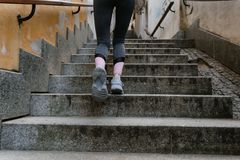
Stairs rather than lifts, which also adds intensity.
Walking during phone calls.
A walk at lunchtime, which also has evidence for afternoon alertness and mood.
Walking to shops rather than driving.
A dog, which is associated in studies with substantially higher activity levels in owners.
And a deliberate walk at a fixed time, which is the most reliable single addition because it does not depend on the day's circumstances.
Walking with company
Which improves adherence considerably.
Walking groups exist in most areas, frequently free and frequently organised through health services, libraries or community organisations.
Evaluations of walking group programmes have found improvements in blood pressure, body composition and wellbeing, alongside social benefits.
Commitment to another person outperforms commitment to oneself substantially in behavioural research.
And for people who are isolated, a walking group provides both interventions at once.
Trackers
Useful with caveats.
Step counts from wrist-worn devices and phones are reasonably accurate for walking and less so for other activity.
Phones undercount because they are not always carried.
Devices differ, so comparing between devices is not meaningful; comparing yourself over time is.
Trials of pedometer and tracker interventions generally find modest increases in activity, sustained better when combined with goal setting and feedback.
And a tracker that produces guilt rather than movement is worth putting away, which applies to a meaningful minority of users.
For people who cannot walk far
Where the message needs adjusting.
Any increase in movement counts, including seated exercise and short frequent bouts.
Chair-based exercise programmes have evidence for strength and function in frailty.
Water-based activity reduces joint loading.
Cycling, including static, provides cardiovascular benefit without impact.
And for people with claudication, walking programmes are a specific evidence-based treatment despite the pain, undertaken under supervision.
The economics
Which are unusually favourable.
Walking requires shoes.
Health economic analyses of physical activity interventions consistently find walking promotion among the most cost-effective public health measures, and active travel infrastructure returns substantially more than it costs in most appraisals.
For an individual, the comparison is between a pair of shoes and the cost of the conditions that inactivity contributes to — which is not a close call.
General information only, not medical advice. Consult a qualified clinician before increasing activity if you have a medical condition or chest symptoms on exertion.
Also by Oliver Nkemdi
- Cooking skills that save the most moneyFood & Budget
- What fitness trackers can and cannot tell youFitness & Movement
- Fibre, and why it is the nutrient that matters mostFood & Budget
- Exercise with a long-term conditionFitness & Movement