Medication & Pharmacy
Generic medicines and what you are paying for
Generics contain the same active ingredient at the same dose, and the price difference is frequently enormous.
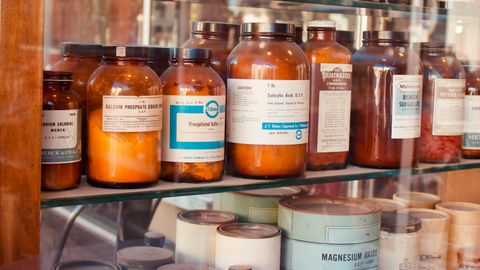
The gap between the price of a branded medicine and its generic equivalent is one of the largest and most easily avoided costs in everyday healthcare.
What a generic is
A medicine containing the same active ingredient, in the same amount and dosage form, as an originator product whose patent has expired.
Regulators require demonstration of bioequivalence — that the generic delivers the active ingredient into the bloodstream at a comparable rate and extent to the original, within defined statistical limits.
Manufacturing must meet the same quality standards.
What can differ: the inactive ingredients, the colour, the shape and the name.
Which is why a switch can look dramatic and be pharmacologically identical.
The price difference
Frequently an order of magnitude.
Once several generic manufacturers enter a market, prices typically fall to a small fraction of the branded price, and health systems and insurers structure their formularies around this.
Which means that for common long-term medications — statins, blood pressure drugs, metformin, antidepressants, thyroid replacement, inhalers in some cases — the annual saving from generic prescribing is substantial for whoever is paying.
In systems with copayments or direct payment, that is you.
Where the differences do matter
A short list of genuine exceptions.
Narrow therapeutic index drugs, where small differences in blood level matter — some anti-epileptics, lithium, warfarin, ciclosporin and levothyroxine in some guidance.
Advice in several countries is to keep patients on a consistent product rather than switching between manufacturers.
Inhalers, where the device technique differs between products and switching without retraining leads to poor control — this is a device issue rather than a drug issue.
Modified-release preparations, where formulations are not always interchangeable.
Biological medicines, where the equivalent is a biosimilar rather than a generic and is regulated differently.
And genuine allergy to an excipient, which is uncommon and real.
Practical ways to reduce medication cost
Depending on the system you are in.
Ask explicitly whether a generic is available and appropriate.
Ask whether a therapeutically equivalent cheaper drug in the same class exists.
Ask about longer prescription durations, which reduce dispensing fees where these apply.
Check prepayment certificates or annual caps where the system offers them, which frequently save people who pay per item substantial amounts and which are under-used.
Compare pharmacies, since dispensing fees and cash prices vary considerably.
Check manufacturer assistance programmes for expensive drugs.
Ask whether an over-the-counter version is cheaper than the prescription, which for common items is frequently true.
And check whether you are exempt from charges, since exemptions for age, income, pregnancy and certain conditions exist in many systems and go unclaimed.
What not to do
Cost-related non-adherence is a documented and serious problem.
Skipping doses, halving tablets without advice, delaying refills and not starting a prescription at all are all common responses to cost and all produce worse outcomes and higher total costs.
Splitting tablets is safe for some and not others — modified-release and enteric-coated tablets must not be split, and a pharmacist can say which.
And buying prescription medicines from unregulated online sources carries real risks: analyses of counterfeit medicines have found wrong doses, wrong ingredients and contaminants.
Legitimate online pharmacies exist and are regulated; verifying registration is worth the two minutes.
The conversation to have
Which most prescribers welcome.
Tell them if cost is a problem, since they generally do not know and frequently have alternatives.
Ask for a medication review if you are on several drugs, which is a defined service in many systems and which frequently identifies items that can be stopped.
Ask what each medication is for and whether it is still needed, since prescriptions accumulate.
And take the full list, including anything bought over the counter or online, to any review.
Deprescribing
The most under-used cost saving in medicine.
Polypharmacy is common, particularly in older adults, and a proportion of it is medication started for a reason that no longer applies.
Structured medication reviews aim to identify these, and stopping an unnecessary drug reduces cost, side effects and interaction risk simultaneously.
This should always be done with a clinician rather than unilaterally, since some medications require tapering.
General information only, not medical advice. Consult a pharmacist or prescriber before changing medication, and do not buy prescription medicines from unregulated sources.
Also by Dr Samuel Adeyemi
- Dental emergencies and what to doDental & Vision
- Overdiagnosis, and why more medicine is not always betterScreening & Checks
- Mouth ulcers, bad breath and the small thingsDental & Vision
- Dry eye, contact lenses and daily eye careDental & Vision